

10/30/26 – HEALTH AND SAFETY RISKS FOR KONA COAST AFTER SPERM WHALE CARCASS TOWED FROM HONOKŌHAU HARBOR
|
JOSH GREEN, M.D. GOVERNOR |
RYAN K.P. KANAKAʻOLE |
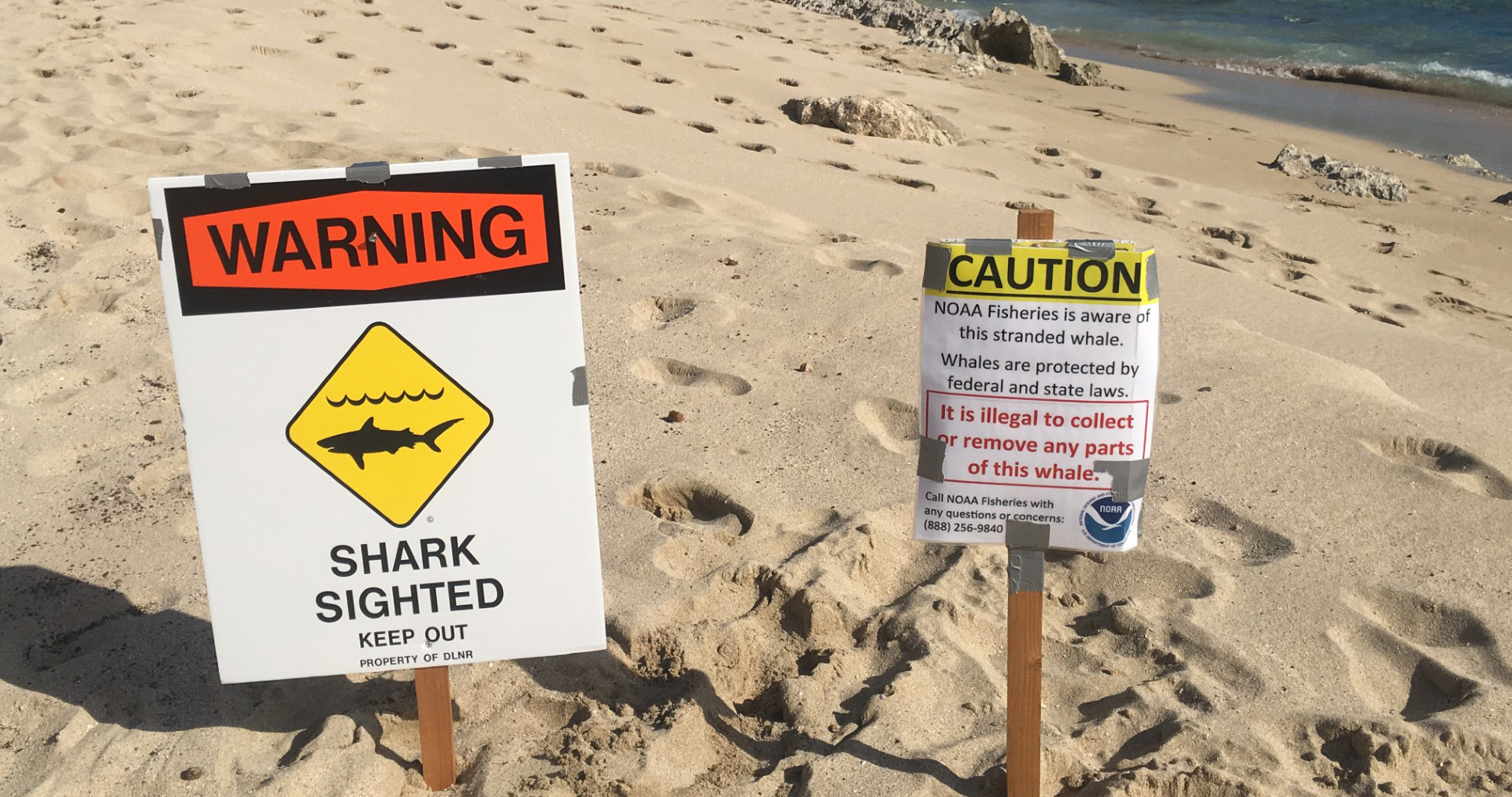
KAILUA-KONA, Hawaiʻi – A sperm whale carcass first seen drifting along the Kona Coast Tuesday, October 27, may pose health and safety risks to boaters, fishers and beachgoers in the days to come.
After reaching the mouth of Honokōhau Harbor, the carcass was towed offshore Wednesday evening by officers with the Department of Land and Natural Resources (DLNR) Division of Conservation and Resources Enforcement (DOCARE), in collaboration with DLNR’s Division of Boating and Ocean Recreation (DOBOR), Division of Aquatic Resources (DAR), Captain Zodiac Kona Chief Operating Officer Colin Cornforth – a trained responder with the Hawaiʻi Whale Entanglement Response Network, and other stakeholders. DLNR is not releasing the location of the carcass.
Hawaiian cultural practitioners with Kiaʻi Kanaloa advised DLNR staff on Tuesday and Wednesday as photos and video of the carcass spread widely on social media.
The carcass was in an advanced state of decomposition and pieces broke off before it was towed, creating hazardous conditions for ocean users along the Kona Coast. Many people were seen in the water next to the carcass, handling pieces and taking pieces away even as large numbers of sharks began to feed.
Decomposing whales can carry zoonotic diseases, which spread from animals to people. Storm systems passing over Hawaiʻi, wind, and strong currents could push pieces of the carcass back toward shore. The public is advised to stay out of the water near any pieces of whale carcass, and to not approach by boat, board or swimming.
“Whales such as this palaoa (sperm whale) are considered Akua Kanaloa and therefore require the utmost reverence, even in these times of transition where they return to the Kanaloanuiākea,” said Roxy Keliʻikipikāneokolohaka, who holds a doctorate in education and serves as executive director of Kiaʻi Kanaloa. “In these times, appropriate cultural behavior is expected which is to know your place in this realm of Kanaloa, to let nature, nature, and to not be mahaʻoi (disrespectfully intrusive) by diving near or through the remains and to leave all iwi (bones) and niho (teeth) alone.”
Any part of the whale, whether still attached to the carcass or found on its own in the areas where the carcass was seen, is protected under state law and the federal Marine Mammal Protection Act and Endangered Species Act. Removing any body parts or bones is illegal.
DLNR will continue to monitor the situation, in close coordination with the National Oceanic and Atmospheric Administration (NOAA) and Kiaʻi Kanaloa.
How the Public Can Help:
Anyone who sees the carcass is asked to call the NOAA Marine Wildlife Hotline:
1-888-256-9840
# # #
Media contact:
Andrew Laurence
Communications Director
State of Hawaiʻi Department of Land and Natural Resources
Phone: 808-587-0396
E-mail: [email protected]
| For more information, contact the Communications Office at 808-587-0396 or via email at [email protected]. |
Legal Disclaimer:
EIN Presswire provides this news content "as is" without warranty of any kind. We do not accept any responsibility or liability for the accuracy, content, images, videos, licenses, completeness, legality, or reliability of the information contained in this article. If you have any complaints or copyright issues related to this article, kindly contact the author above.
